Landscape of Mercy
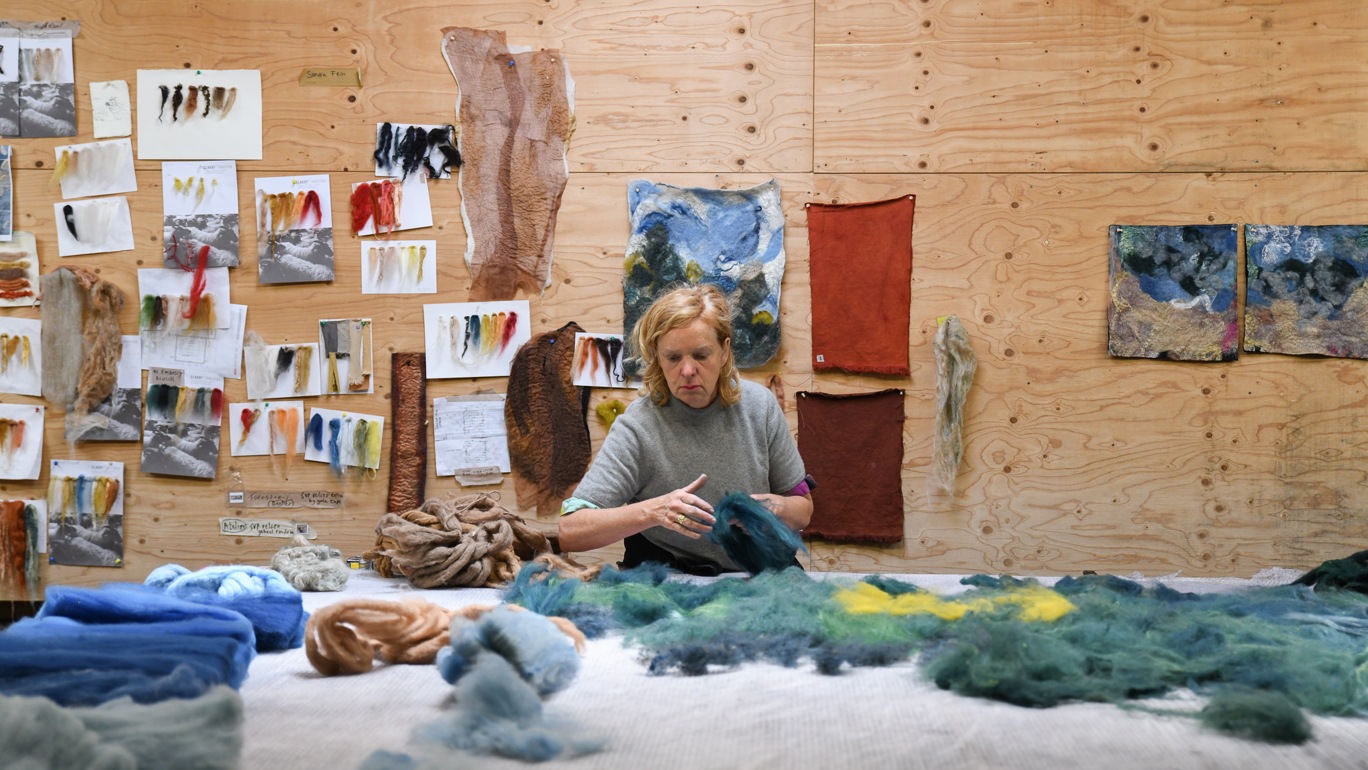
Dutch artist Claudy Jongstra brings together contemporary art, craft and ecology in Landscape of Mercy, a monumental textile work created especially for Aliée Istanbul.
Seasonal Works
Tony Cragg
Gregor Hildebrandt
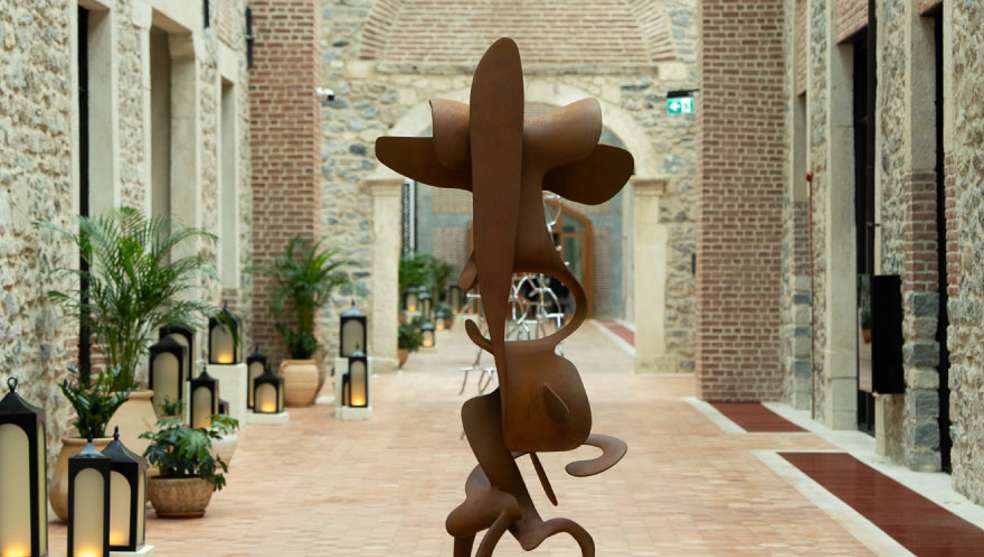
Tony Cragg
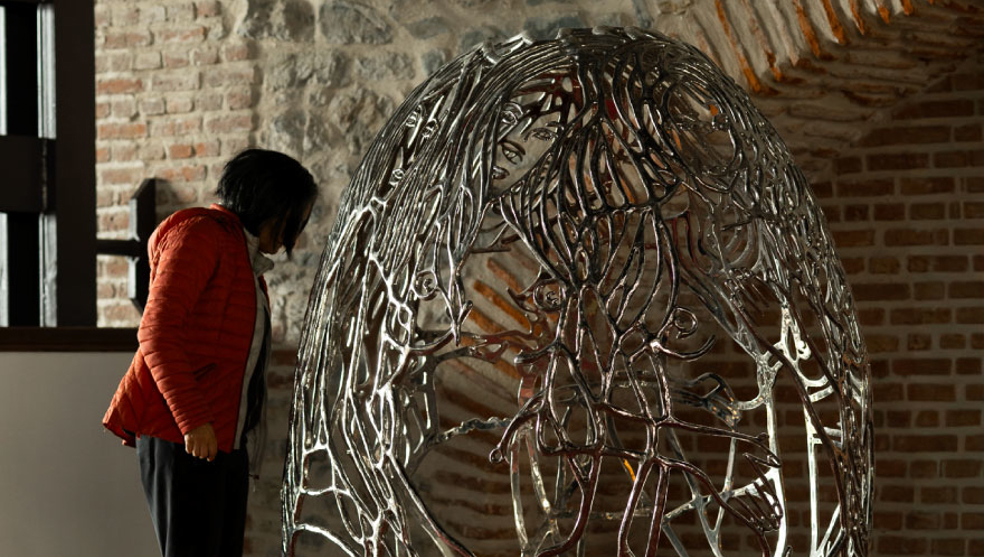
Ghada Amer
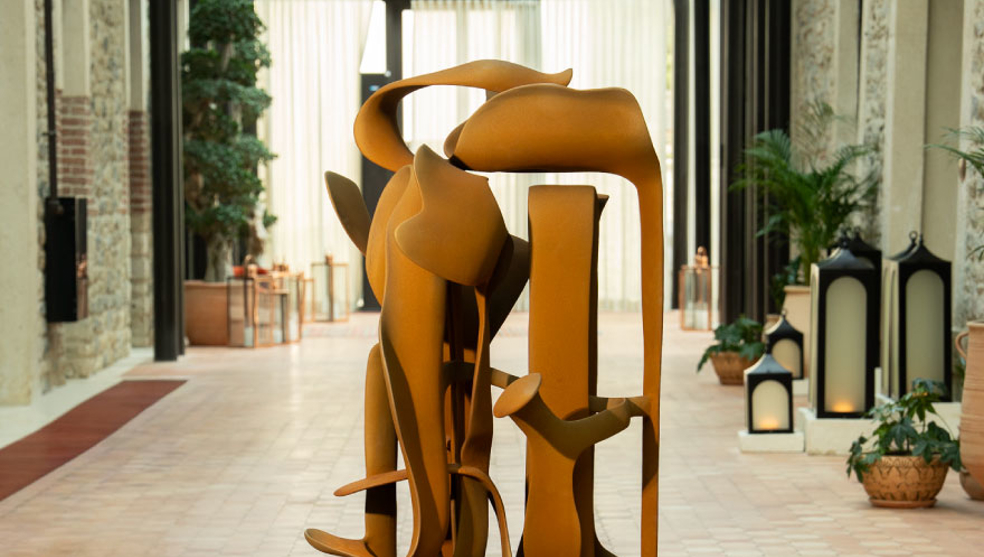
Tony Cragg
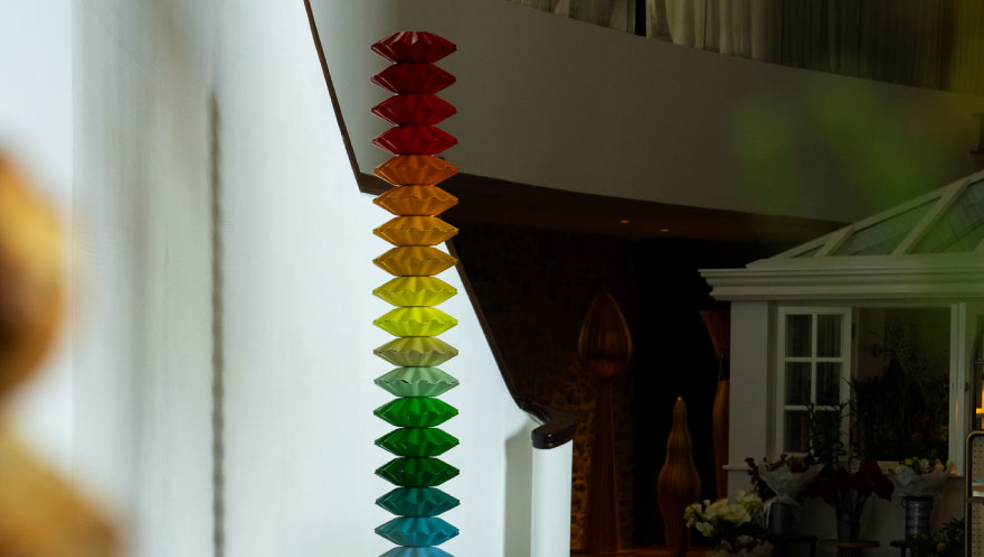
Gregor Hildebrandt
Multiplicity Without Apology
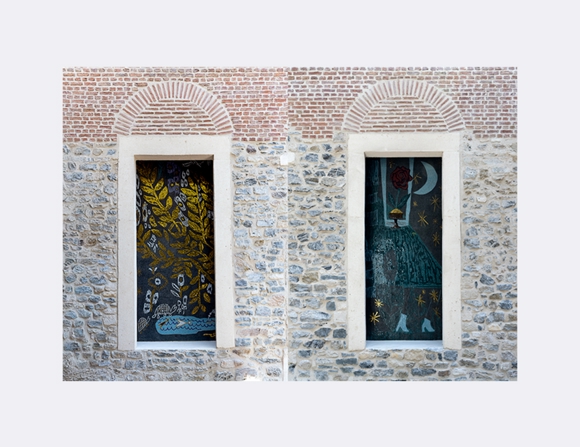
Summer Wheat
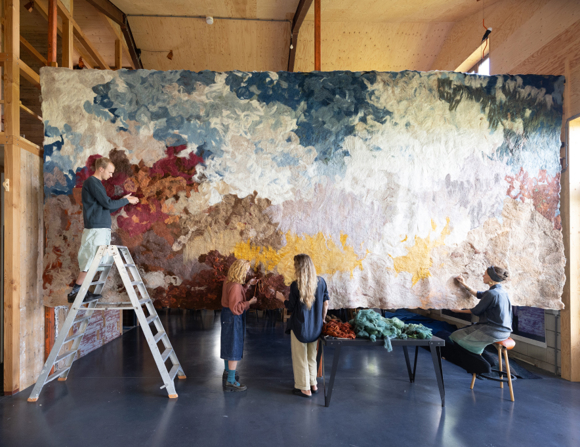
Claudy Jongstra
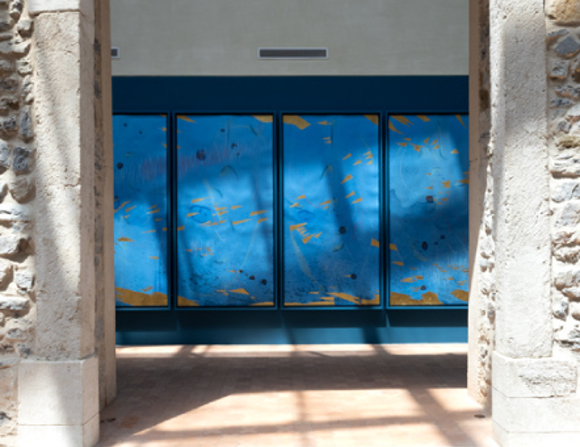
Jorinde Voigt
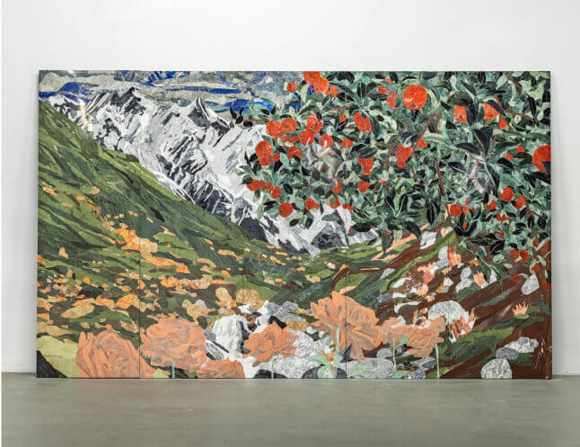
Hamra Abbas
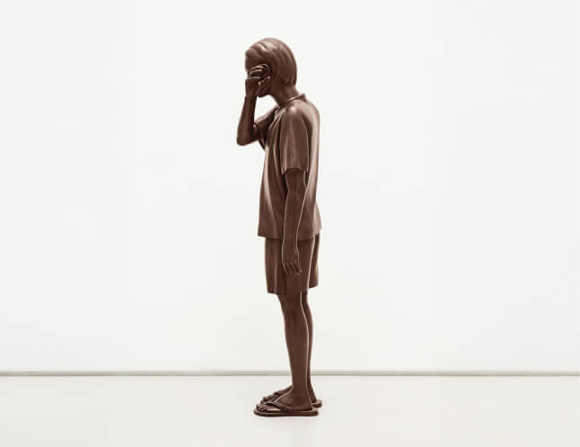
Flavio Cerqueira
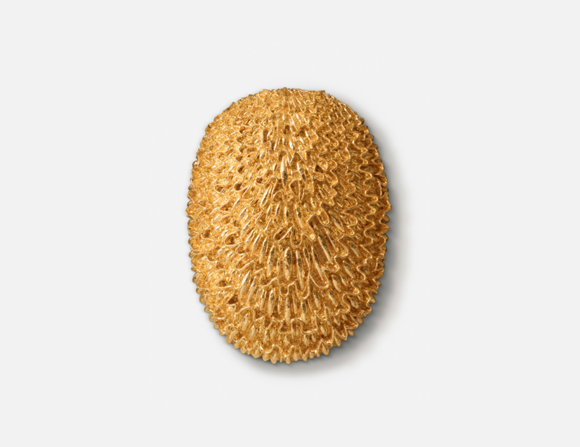
Johan Creten
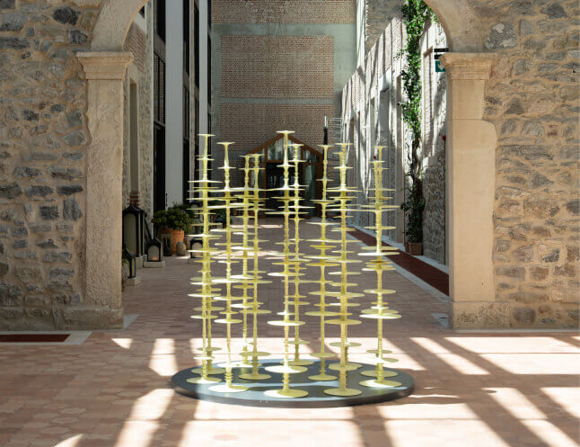
Erol Eskici
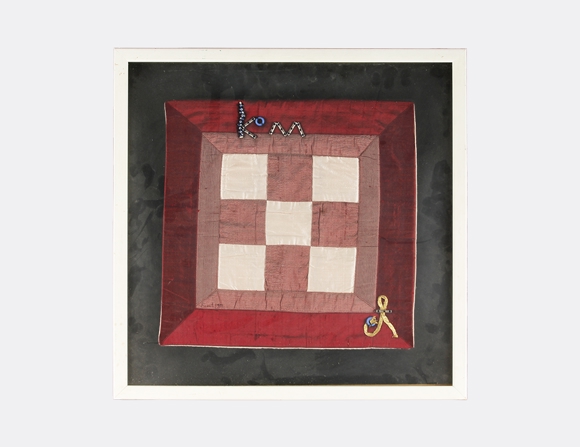
Komet
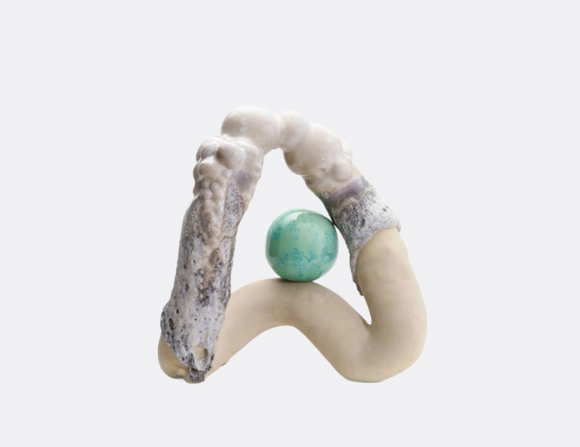
Tümay Erman
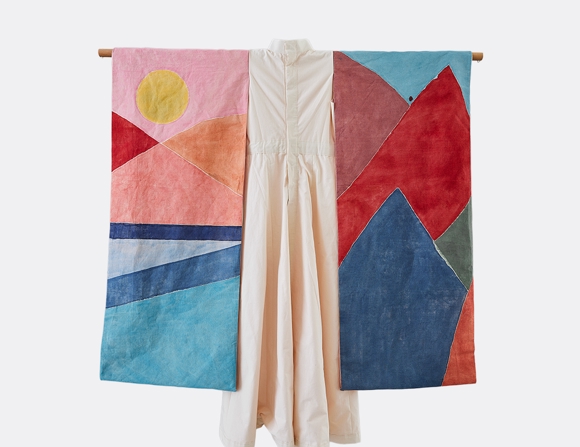
Nefeli Papadimouli
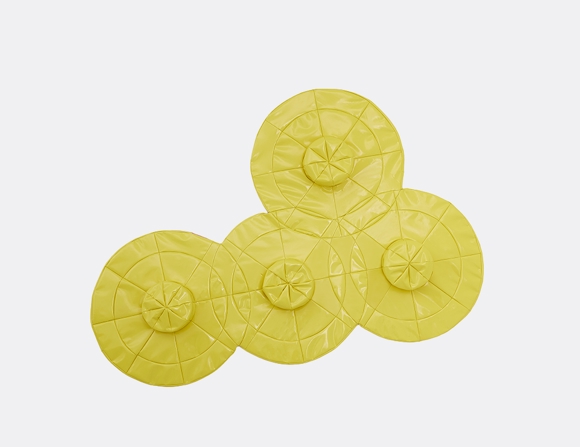
Nefeli Papadimouli
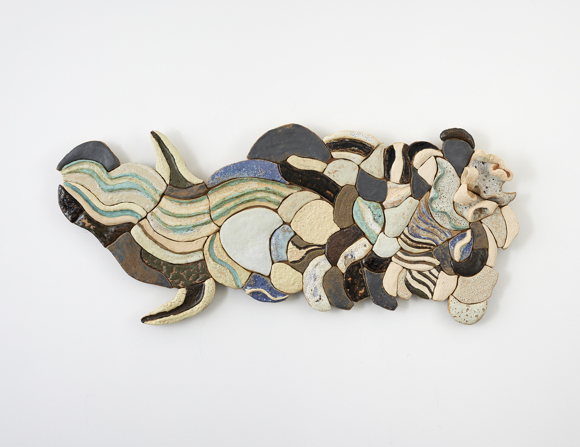
Jennifer İpekel
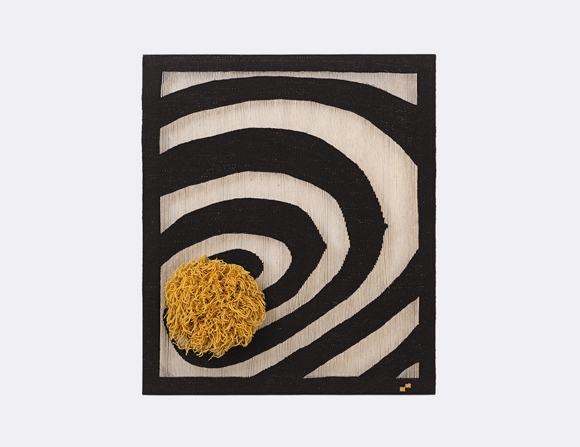
Belkıs Balpınar
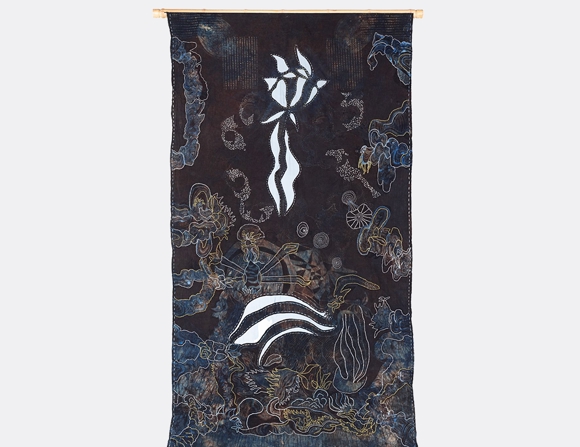
Jennifer İpekel
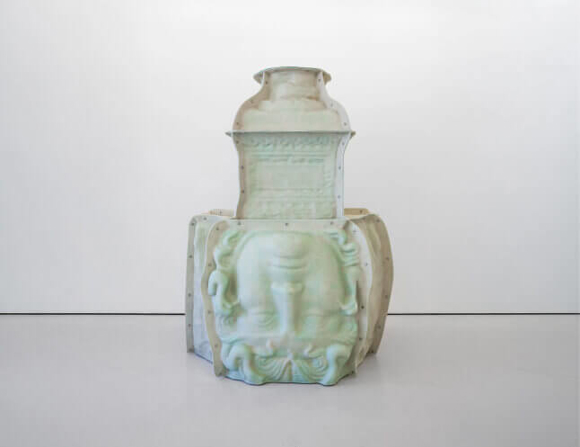
İrem Günaydın
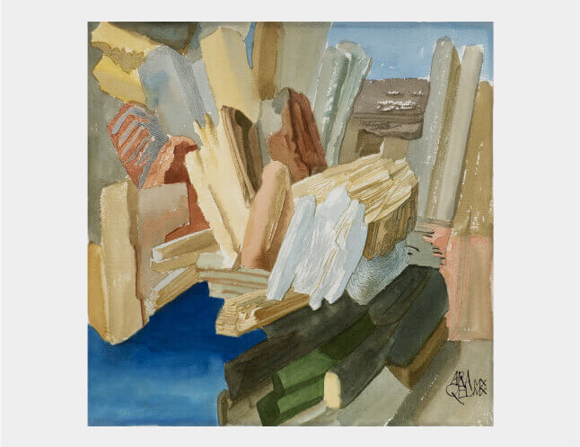
Karen Arakel
Bülent Özgören
Tunca
Saliha Yılmaz
Antoine Ignace Melling (Gravürler)
Arslan Sukan
Tuğba Güney (Pink Bar Kalemişi)
Melih Çebi
Ahmet Güneştekin
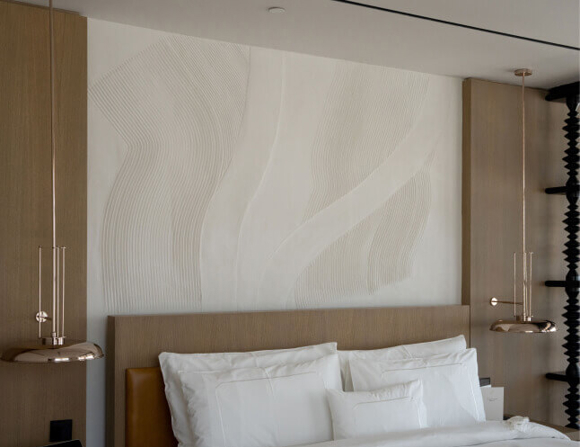
Sahra Bas
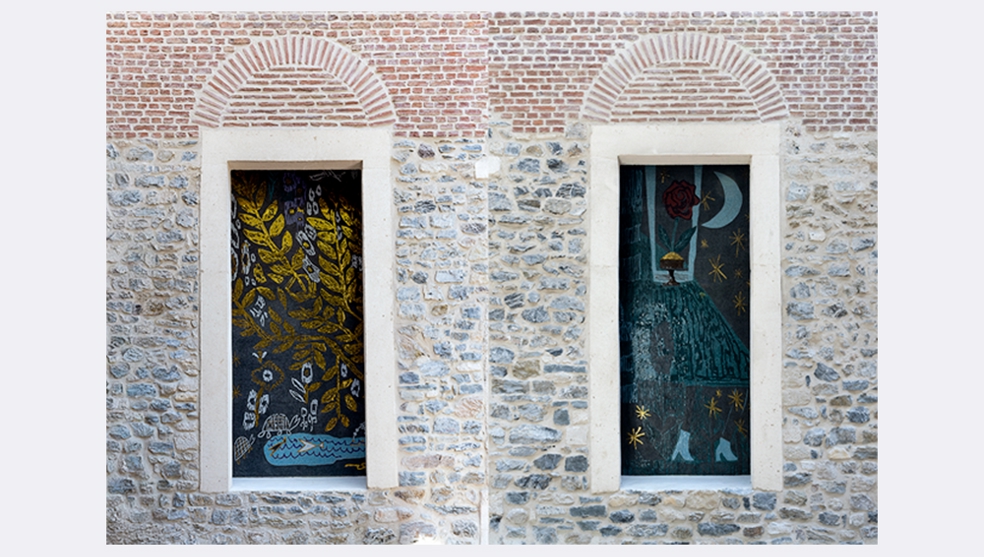
Subterranean Garden
Summer Wheat joined Aliée’s permanent collection with this installation created in Istanbul as the first guest artist of the Tersane Istanbul Artist Residency program. The mosaic titled Subterranean Garden evokes the idea of walking on water with motifs embedded in a floor dominated by black, gold, and turquoise tones.
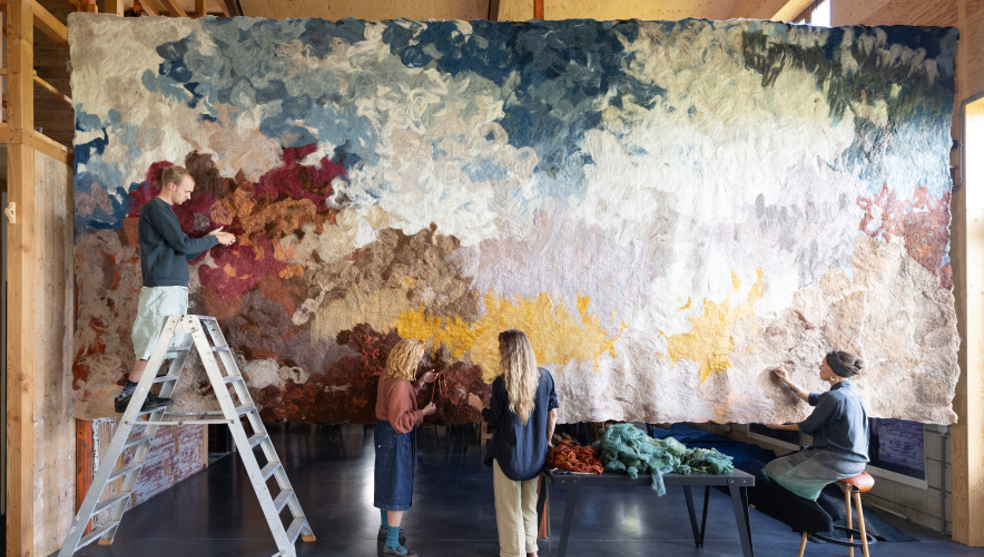
Landscape of Mercy
Dutch artist Claudy Jongstra brings together contemporary art, craft, and ecology in Landscape of Mercy, a monumental-scale textile work created for Aliée Istanbul. Working with natural fibres and plant-based pigments, Jongstra combines traditional production techniques with her research into biodiversity and regenerative agriculture. Made of wool, silk, and cotton, the work reflects the artist’s approach to fostering a more reciprocal and sustainable relationship between humans and nature.
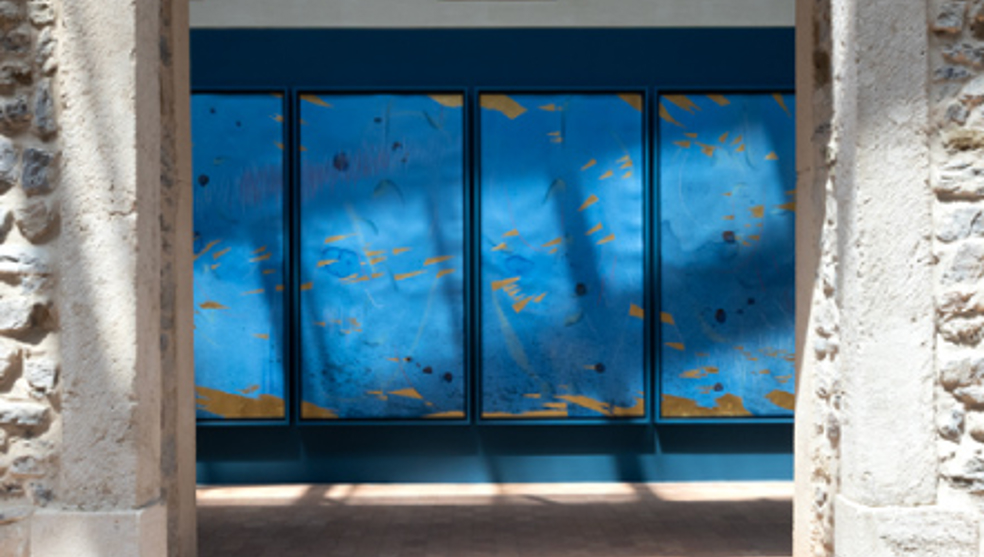
Universal Splash
Jorinde Voigt is a Berlin-based German artist known for her complex notation systems derived from fields such as music, philosophy, and phenomenology. Her large-scale drawings explore the internal processes of perception and emotion through a visual language composed of straight and curved lines, numbers, words, and collage elements. This method invites viewers into realms of abstract thought and aesthetic experience, expressing individual perceptions and experiences through a universal visual language. Her approach positions art not only as an aesthetic tool but also as a means of understanding and sharing the inner world of the human experience. Voigt’s works take the viewer on both a mental and emotional journey, revealing deep connections between art and the human condition. In her eight-part paper-based work titled Immersive Integral – Universal Splash, created using India ink, gold leaf, pastel, and graphite, she places the concept of perception at the center. She seeks to understand the inner structure of archetypal images beyond the visual, exploring how such images are experienced and collectively shared. The concept of "immersion" here relates to both intellectual and bodily experience.
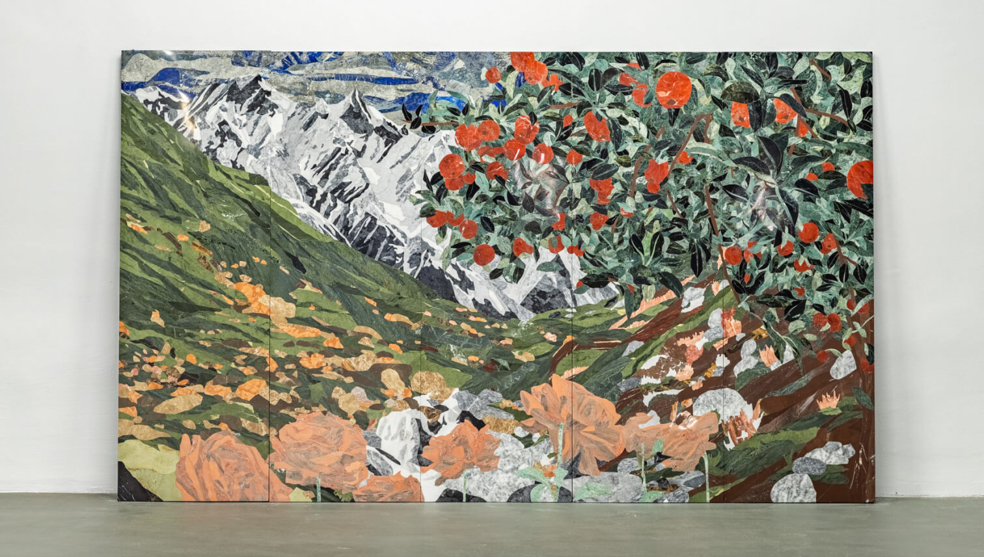
Hamra Abbas
Hamra Abbas’s work Garden 3 reimagines the garden as a site of both historical and personal memory. Created using the marble inlay technique with stones such as lapis lazuli, serpentine, and jade, the pieces explore themes of displacement, identity, time, beauty, and fragility. By merging historical and contemporary references, Abbas invites the viewer to consider the garden both as a metaphor for personal experience and as a space to reflect on the relationship between nature, memory, and history.
Details:
Garden 3, 2024.
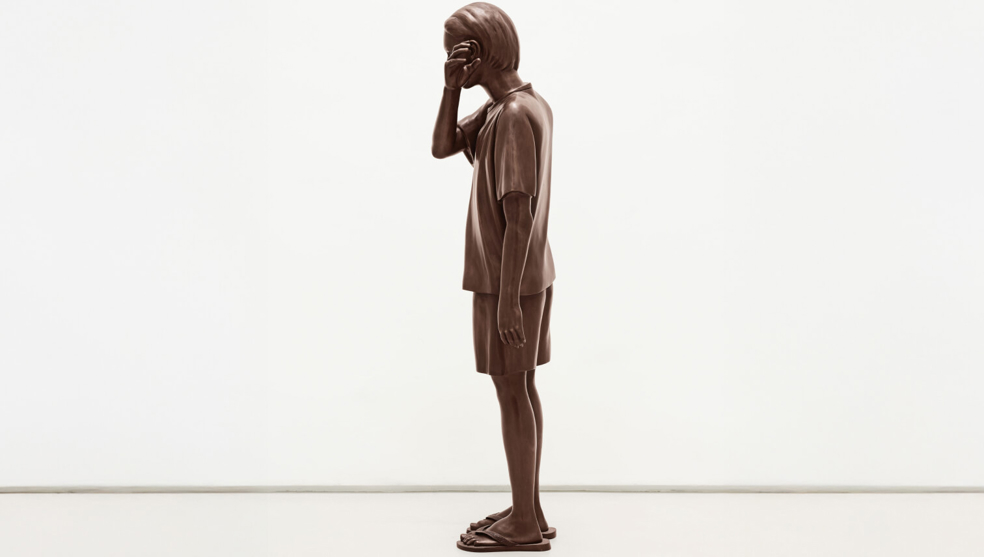
Flavio Cerqueira
Flavio Cerqueira’s works reveal social and personal vulnerabilities through young figures cast in bronze. His sculptures focus on human states such as innocence, solitude, and anticipation, inviting the viewer into an intense emotional experience. It’s Better Not to Know features a figure turned against the wall with closed eyes, symbolizing the rejection of knowledge and representing both personal protection and societal blindness. Cerqueira’s simple yet powerful style extends from the everyday to universal inquiries.
Details:
It's Better Not to Know, 2024.
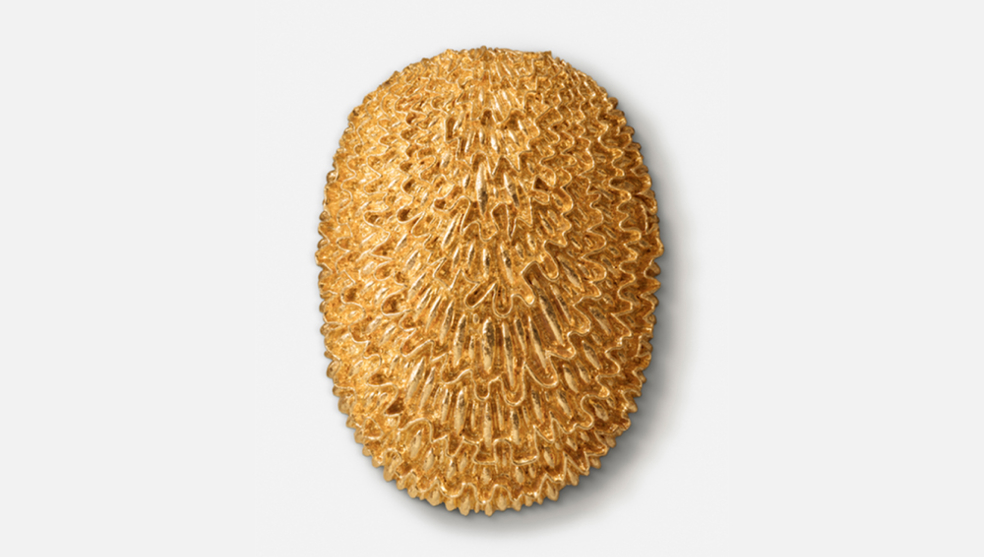
Johan Creten’s fascination with the meeting of the sacred, the divine, the natural, and the celestial is at the heart of his Glory series, begun at the Villa Medici in Rome. Inspired by images of “Glories” as abstract signs of the divine, he created Les Gloires, exploring the link between earthly and heavenly glory, power, and the fleeting nature of glory itself. Some works evoke spiritual awakening, while others recall the sun’s role in early Egyptian art, connecting it to the cosmos and to existential questions.
Details:
Stardust (Glories Series), 2018
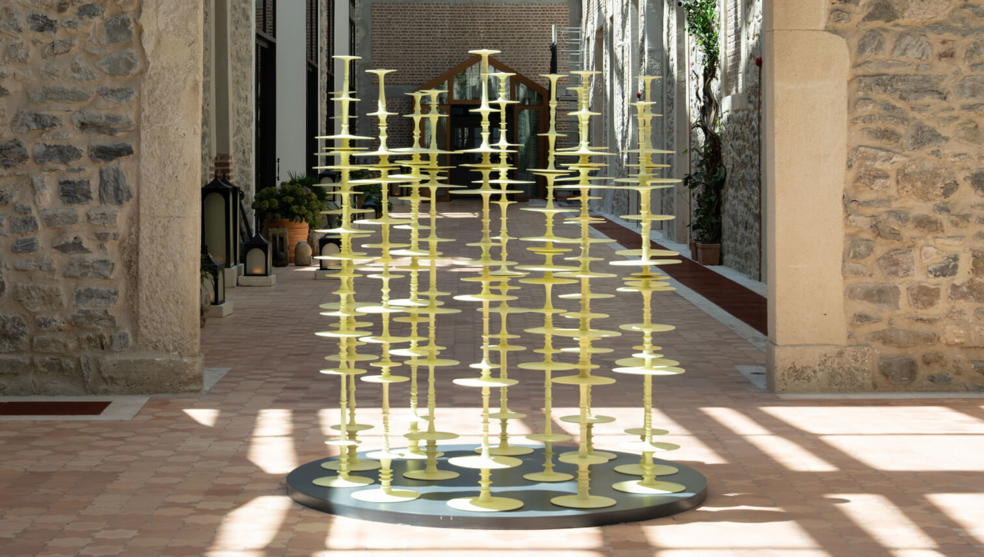
Erol Eskici
Eskici combines the geological themes she focused on in the 2018 Stratigrapher exhibition with Riegel’s concept of the “natural monument.” These monuments, formed without any human intervention, represent natural, organic, or inorganic entities that must be preserved. With this concept, the artist establishes a connection with “Unwanted Monuments,” placing the wood—whose directional structure draws attention—at the center of the series.
Details:
Unintended Monument No: 4, 2022.
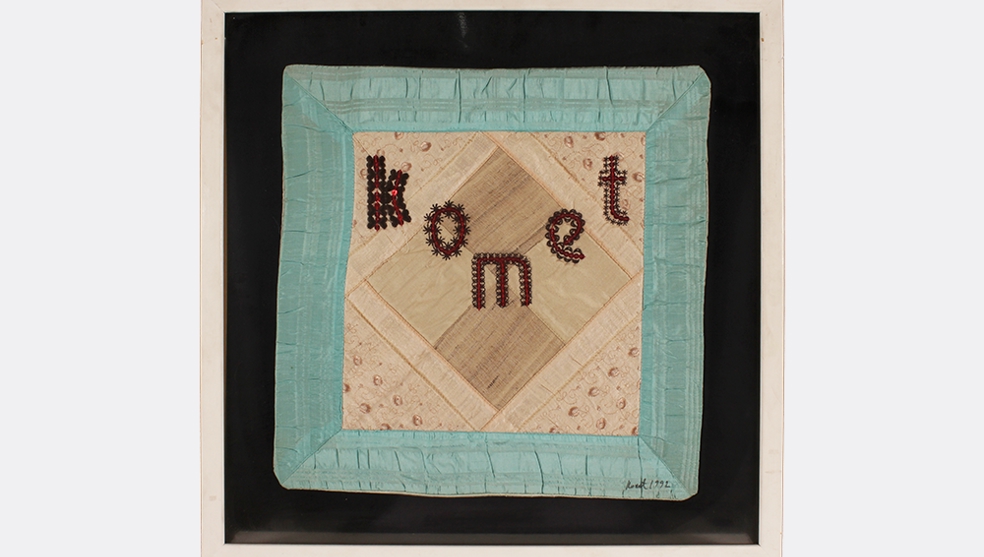
Enstitü Komet
Komet’s 1992 “Enstitü Komet” series is a significant body of work in which the artist critically examines the concepts of institution, identity, and authority through an ironic lens. The artist’s name, written directly and placed at the center, makes power visible while simultaneously pointing to its artificial and constructed
nature. The stitched, textile-like surfaces suggest the fabricated, temporary, and fragile structure of institutions. While the orderly square format evokes academic seriousness, the handwritten-style “komet” deliberately disrupts this gravity; by transforming himself into an imaginary institute, the artist offers a quiet yet powerful critique that subverts the conventional relationship between artist and institution.
Details:
Untitled, 1992
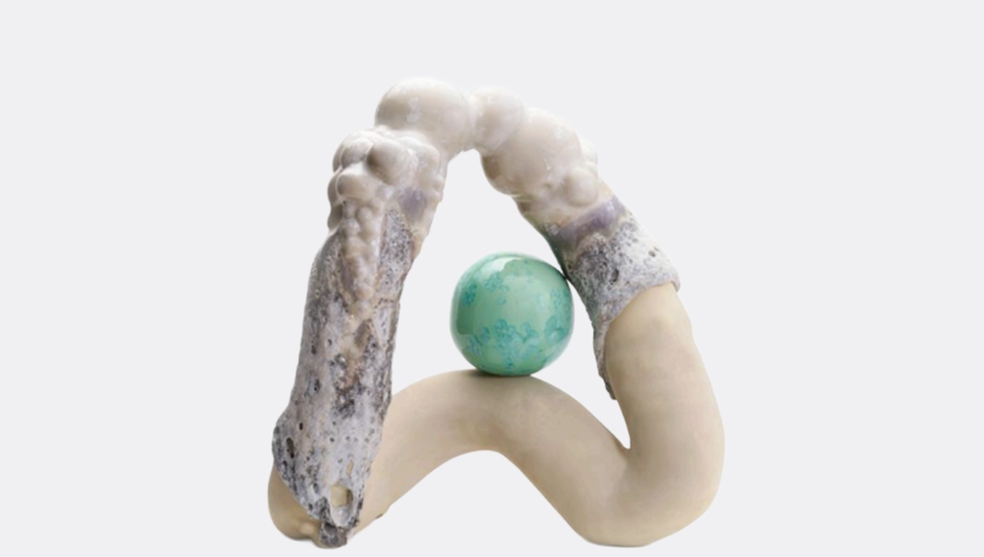
Bonding
Tümay Erman’s work Bonding, as its title suggests, invites the viewer to reflect on the state of “forming bonds” across physical, emotional, and material dimensions. The relationship between the organic, body-like forms and the smooth, almost fragile sphere at the center evokes notions of protection and dependency, contact and distance, balance and tension. The soft yet partially distorted surfaces imply that bonds are never entirely pure or flawless; rather,
they are structures that transform, erode, and are reshaped over time. The work presents the act of leaning on one another as both a source of strength and a condition of vulnerability, offering a quiet yet powerful metaphor for the dual nature of connection—at once sustaining and limiting.
Details:
Bonding, 2023
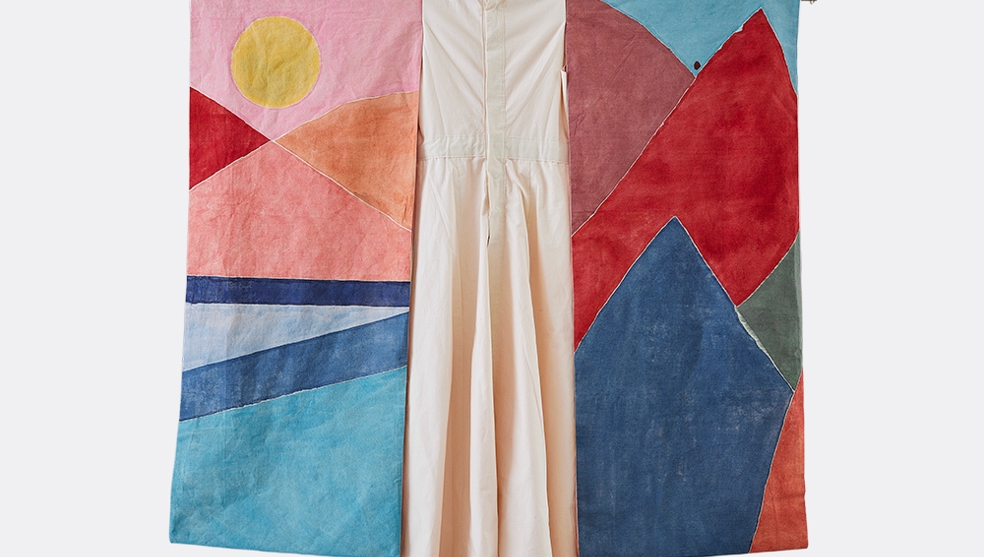
Dream Coat
Dream Coat by Nefeli Papadimouli explores temporary, night-long communities through an installation of 10 suspended costume-paintings, a soundtrack, and a video. Inspired by Greek myths of Orpheus and Hypnos, as well as the visual languages of Etel Adnan, Matisse’s Dance, and Loie Fuller’s butterfly dance, it imagines dreams as a shared space linking different dream worlds. Developed with local participants in “Dreamstorming” sessions about recurring dreams, the project reflects how dreams transcend individuals — existing before and after us — moving from one person to another and uniting them in a collective performance space.
Details.
Dream Coat, 2025
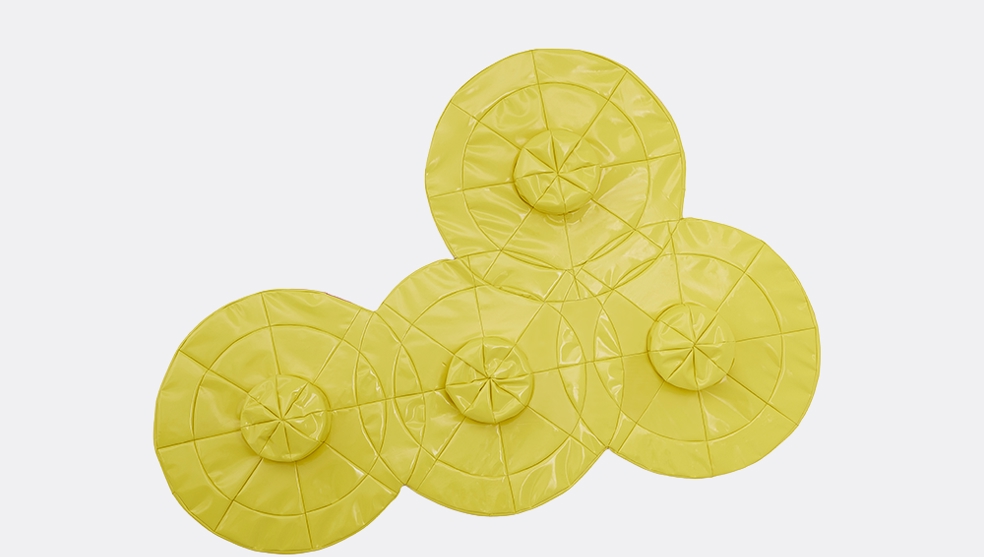
Kind of Us
The sculpture series Kind of Us consists of double-sided collective hats meant for multiple wearers. Hung on walls, they resemble merging celestial bodies in primary colors on one side and op-art-inspired patterns on the other. Designed as props for collective movement, the hats symbolize a shared headspace where individual bodies connect, constrained yet transformed by their links, highlighting the tension between individuality and collectivity.
Details:
Kind of Us (Chapeau à porter à quatre jaune), 2024
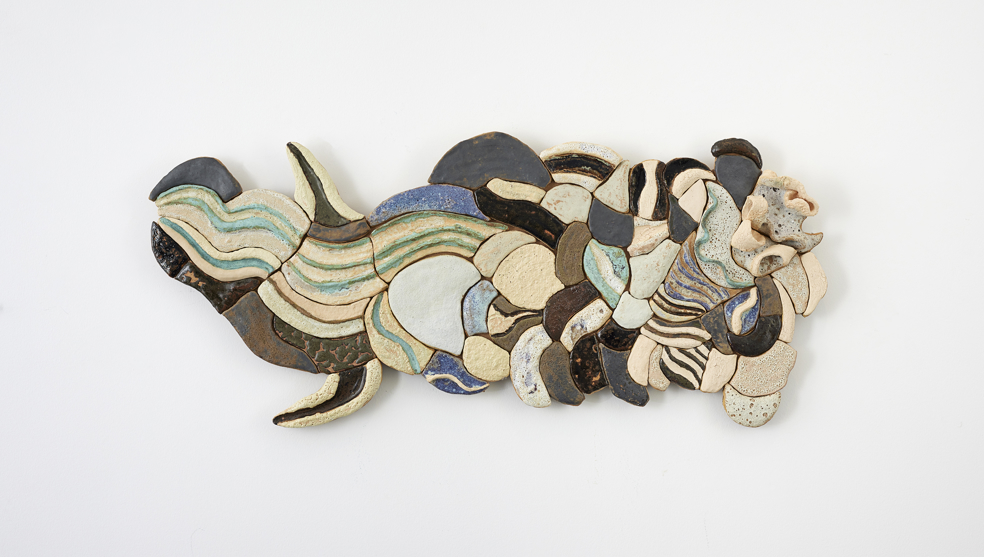
Unkown maps
Jennifer İpekel’s work Unknown Maps may evoke a sense of organic wholeness at first glance; however, as one moves closer, it becomes clear that it is formed by the coming together of countless fragments, emerging almost like a mythical being. The undulating, curved, and layered arrangement of ceramic pieces creates a body that carries the memory of earth, water, and stone. Each ceramic piece is like a story, a layer, a residue on its own; when united, they transform into the body of a collective narrative. The work also carries an archaeological sensation; its fragmented structure makes it appear as if remnants from different times have been assembled together. This evokes the layered nature of civilizations and the continuity of cultural memory.
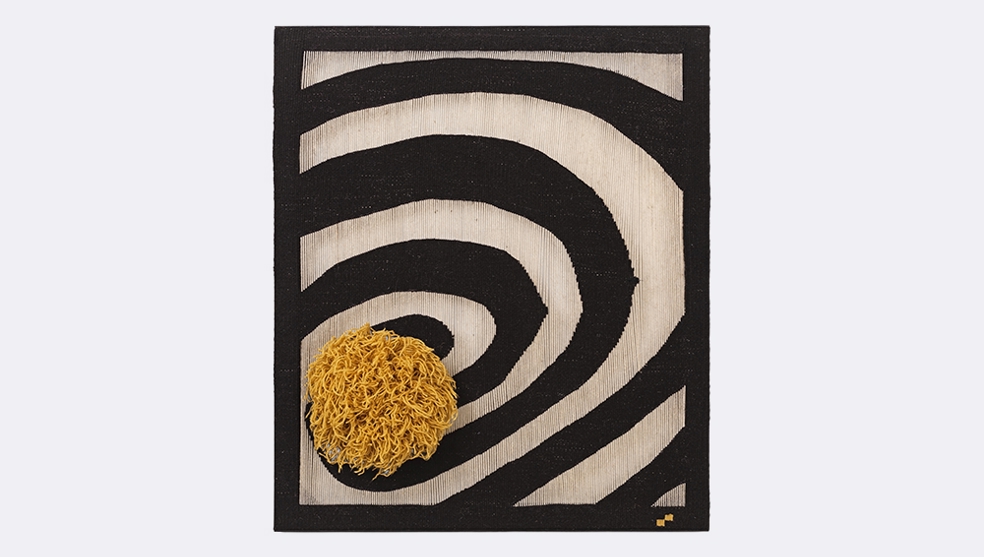
Belkıs Balpınar
Belkıs Balpınar’s works merge traditional Anatolian carpet weaving techniques with contemporary art, giving her pieces not only an aesthetic but also a conceptual dimension. In her work İçe Dönüş, themes of inner exploration, self-discovery, and the individual’s inner world come to the forefront. Using the weaving‑ma technique, Balpınar creates voids and free threads that introduce spatial multidimensionality, offering the viewer not only the carpet itself but also an experience of different dimensions of the universe, as well as perceptions of time and space.
Details:
Introspection - I / İçe Dönüş - I, 2023.
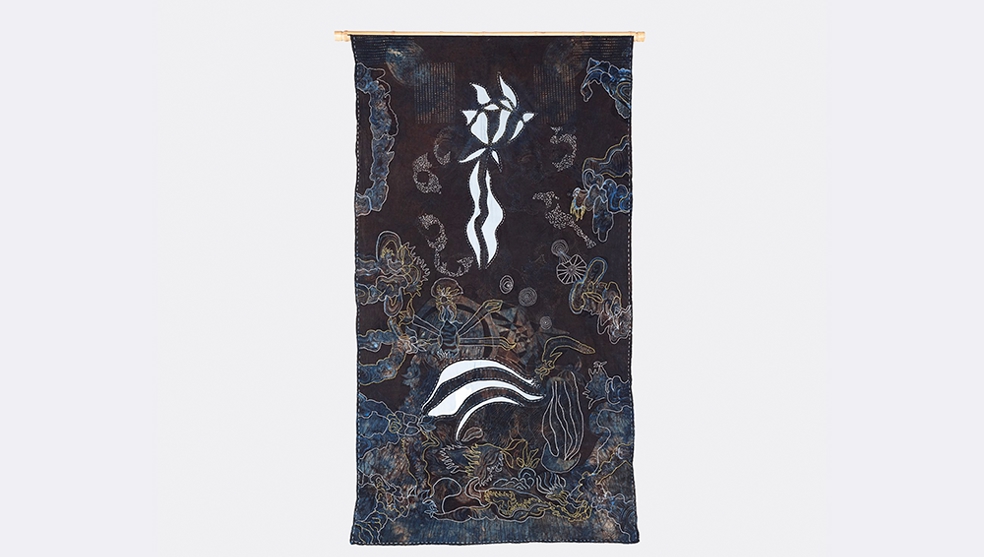
Free Hands
Jennifer İpekel builds bridges between contemporary narratives and ancient mythologies, creating personal mythologies of her own. Her vibrant paintings and ceramics, inspired by nature, animism, folklore, and craft, explore the connection between humans, nature, and the cosmos. By using batik and traditional techniques, she reflects on roots, cultural heritage, and universal values. “Free Hands” draws inspiration from creation myths, representing the Micro, Macro, and Light Cosmos of the Tribawana philosophy. Her works invite viewers to reconnect with nature and question humanity’s place in the universe.
Details:
Free Hands, 2024
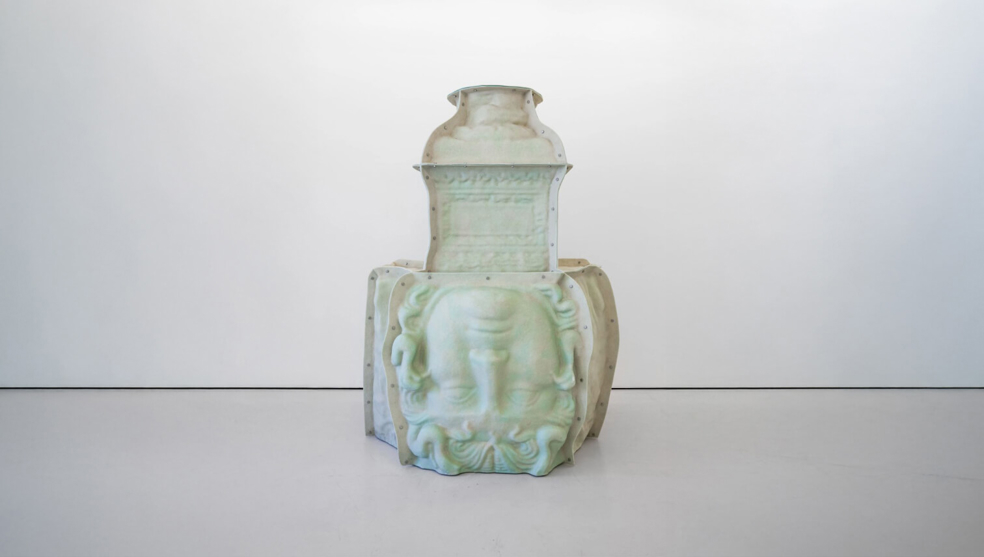
İrem Günaydın
The Fourth Medusa is a contemporary artwork created using fiberglass instead of marble, referencing the three historical Medusa heads of Istanbul. Through photogrammetry, the form is fragmented and reshaped, questioning the mythology of Medusa, the concept of reflection, and the relationship between art and reality. In her “Bastardization” series, İrem Günaydın transforms the Medusa heads into a mold—detaching them from their historical context and adding a new layer of meaning. This work reinterprets the dynamics between mythology, art, and architecture by introducing a fourth dimension to the traditional narrative.
Details:
Fourth Medusa, 2022.
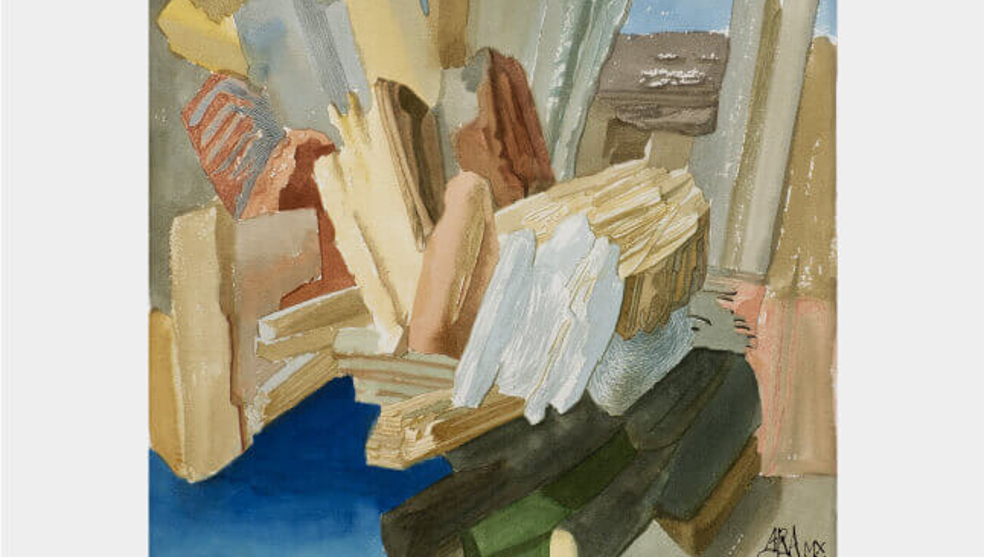
Karen Arakel
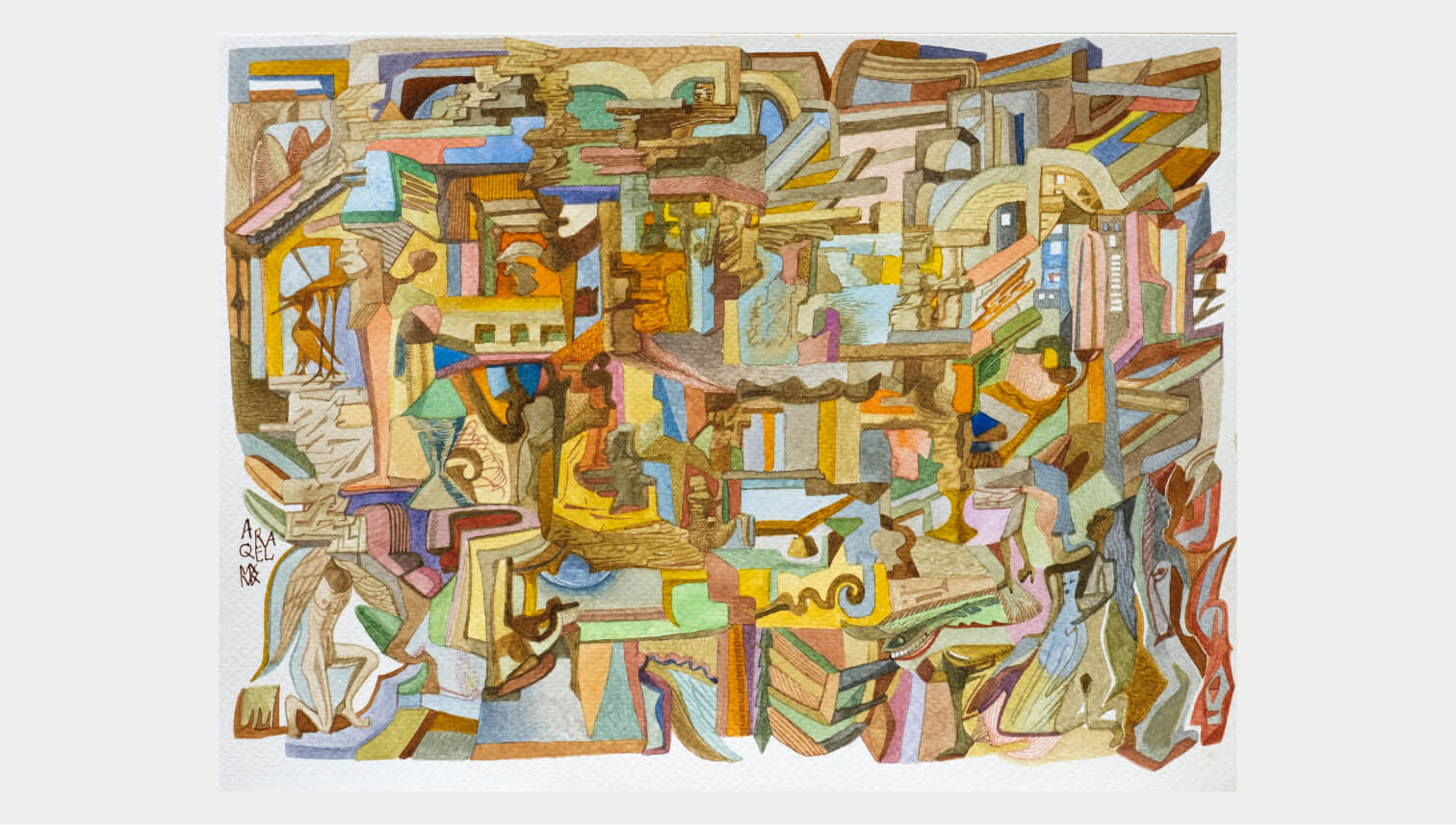
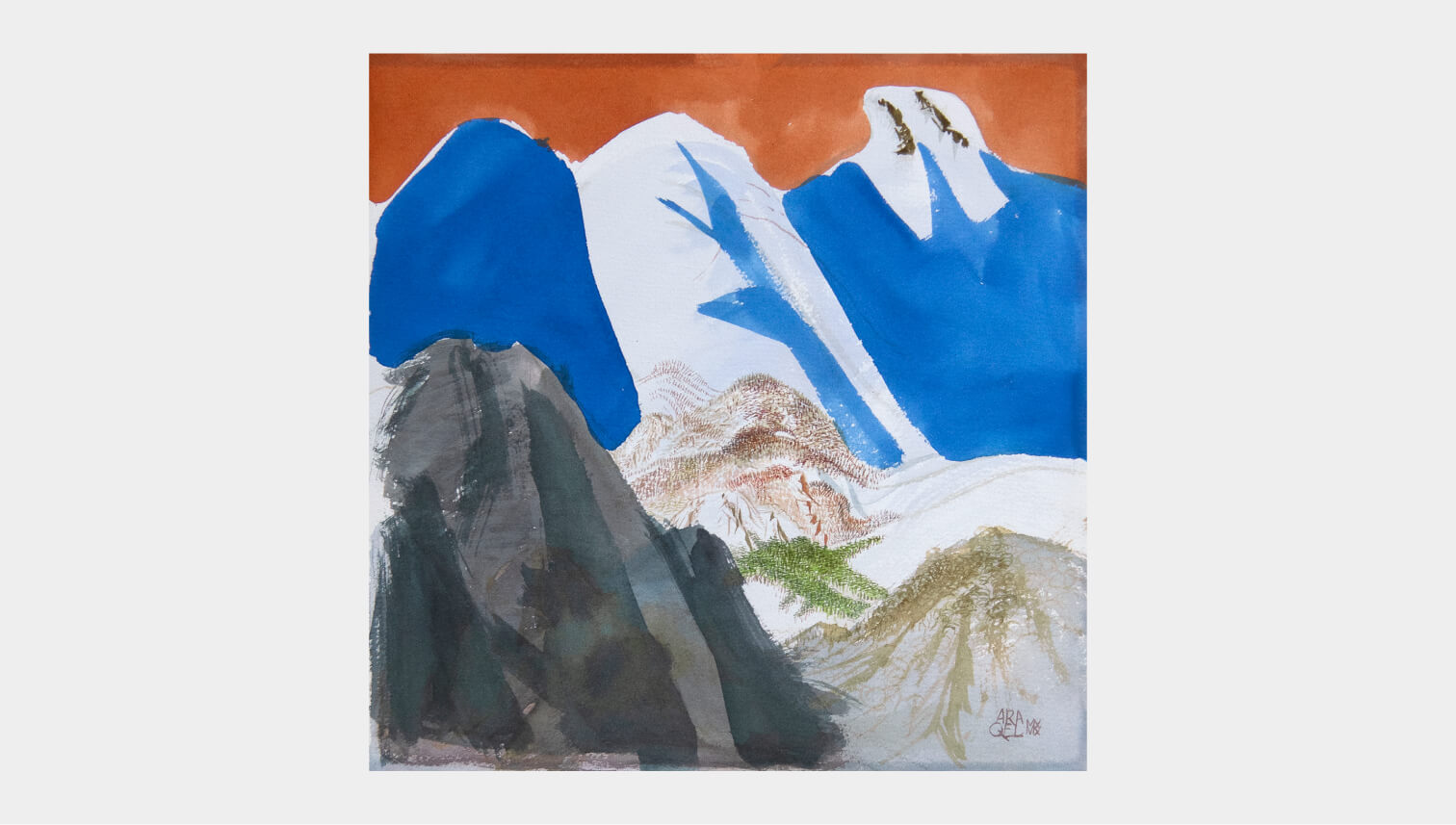
Karen Arakel’s art is marked by elements of surprise, unexpected contrasts, and a rebellious approach to convention. Drawing inspiration from surrealism, her works often incorporate political and social themes, guided by her philosophy that “everything intelligent is simple.” Enriched with allegories of nature, human figures, illusions, and symbols, Arakel’s pieces invite viewers on an introspective journey. By defying the rules of perspective and gravity, she transforms dreams, instincts, fears, and pure unity into a compelling visual narrative.
Details:
Untitled, 2020.
Details:
Untitled, 2020.
Details:
Untitled, 2020.
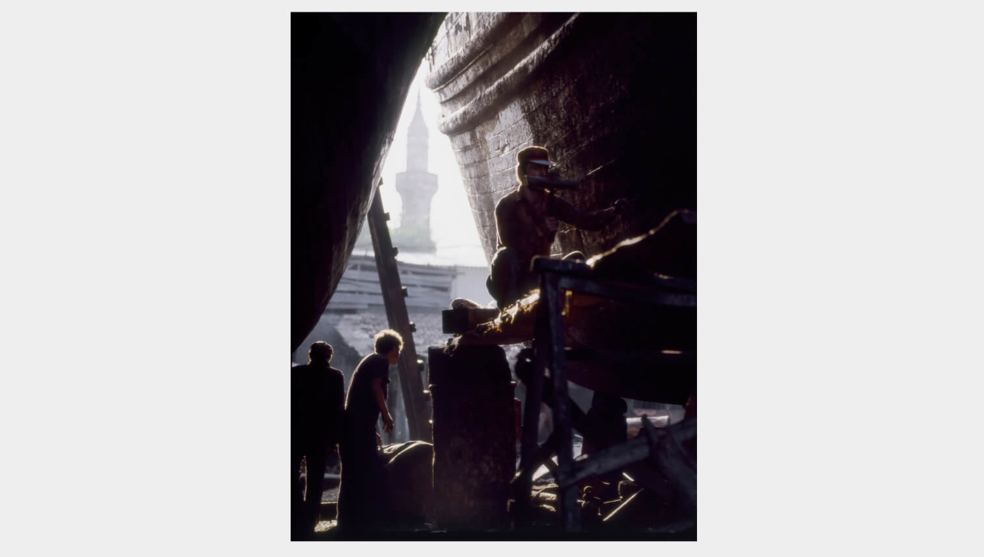
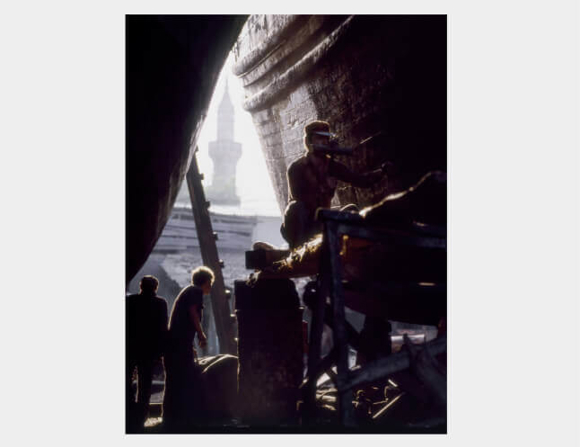
Bülent Özgören
Bülent Özgören’s photograph Kalafat generally explores themes of history, labor, and collective memory. The term “kalafat” refers to the process of sealing the gaps between a ship’s planks, and in the photograph, it symbolizes both a tangible practice of labor and a cultural continuity connecting the past with the present. Özgören’s work invites the viewer to reflect on the esthetics of everyday work and the relationship between space and memory shaped over time.
Details:
Kalafat, 1982.
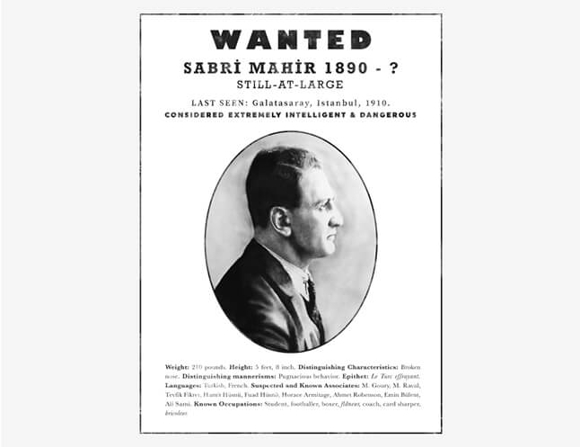
Tunca
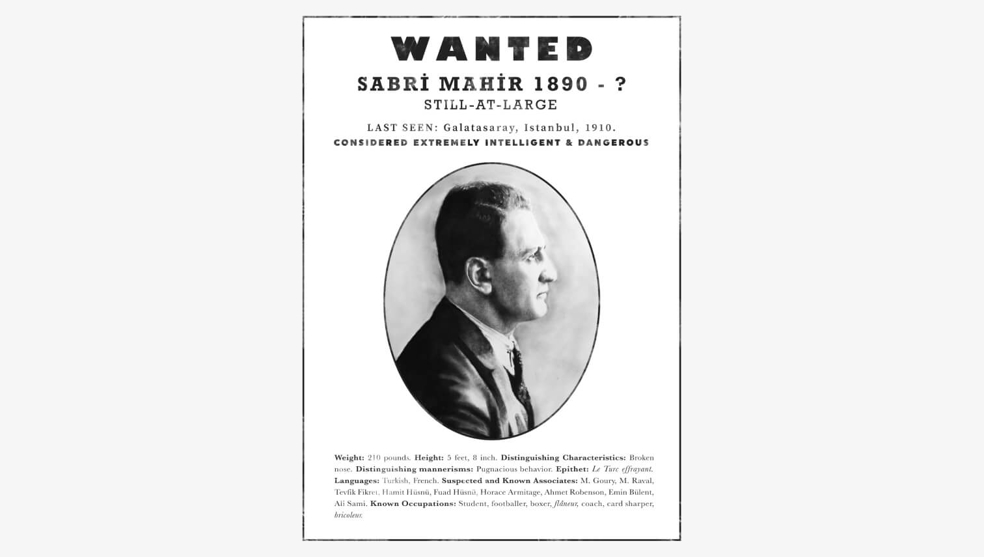
Six boxer portraits, believed to be taken in Berlin in the 1910s, resurfaced years later at an auction in İstanbul. Tunca reimagines these images to reconstruct the figure of Sabri Mahir, whose life is veiled in myth. He is accompanied by Arthur Cravan - a boxer-poet whose death remains a mystery.
Details:
Archival Print on Hannemühle 2021.
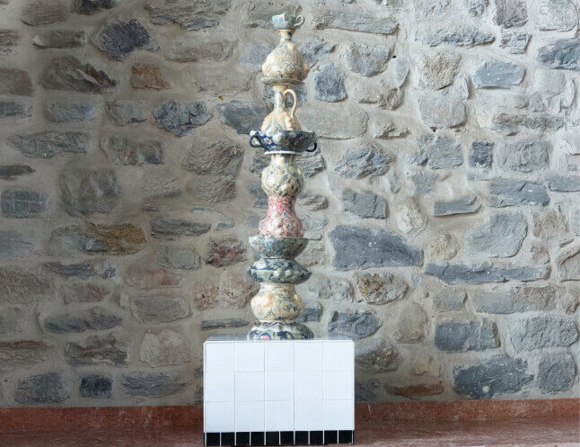
Saliha Yılmaz
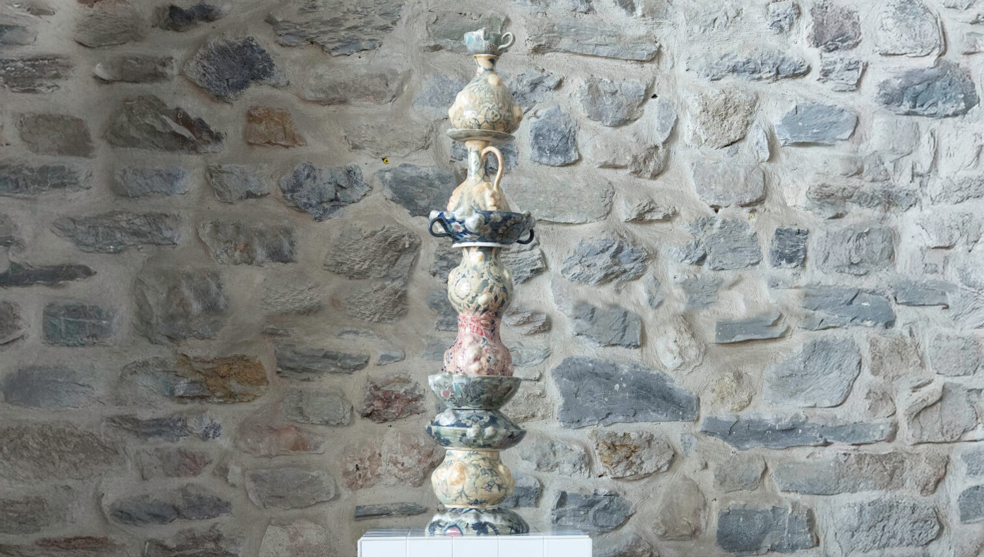
Conceptually linked to “The Female Bird Builds the Nest,” the artwork “What Accumulates in the Kitchen” explores the roles of women in society. Today, women achieve countless successes, yet are still expected — according to social norms — to carry the full weight of domestic responsibilities, embodying the identity of the “female bird.” While the phrase “the female bird builds the nest” is often meant to praise women, it ultimately confines them to the domestic sphere. The sculpture’s stacked plate forms evoke a totemic quality, representing the artist’s vision of the female body as a permanent fixture in the kitchen. This imagery materializes the layered identities and responsibilities imposed on women, highlighting the tension between empowerment and traditional expectation.
Details:
Piled up Dishes, 2022.
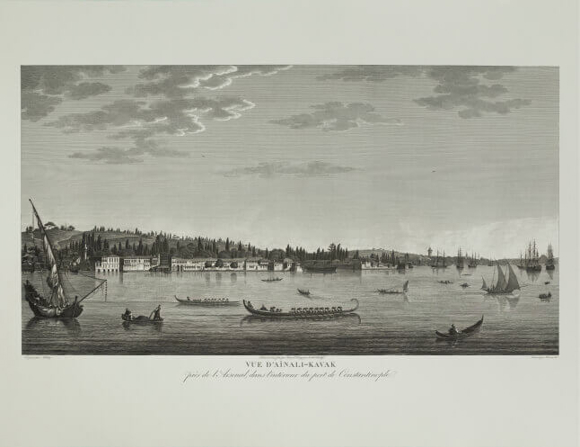
Antoine Ignace Melling (Gravürler)
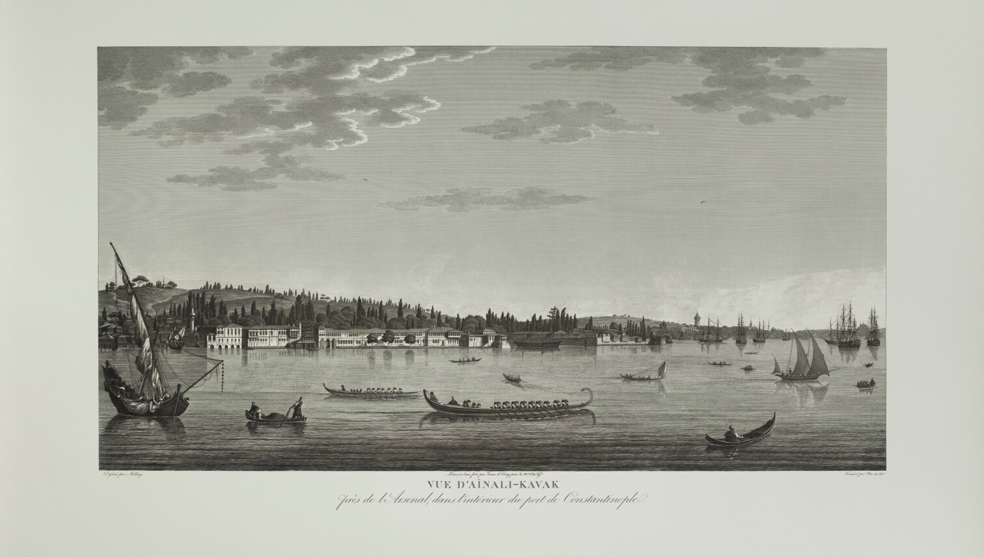
Antonie Melling’s Istanbul engravings are highly valuable works that document late 18th to early 19th century Istanbul in remarkable detail, both artistically and historically.
Melling arrived in Istanbul in 1795 and closely observed the city while serving as a court architect. In 1819, he published his album Voyage Pittoresque de Constantinople et des Rives du Bosphore in Paris, featuring 48 engravings that immortalize Bosphorus landscapes, palaces, mosques, and scenes of daily life. These works are regarded as some of the most reliable depictions of İstanbul from the pre-photography era.
Details:
Voyage Pittoresque de Constantinople et des Rives du Bosphore
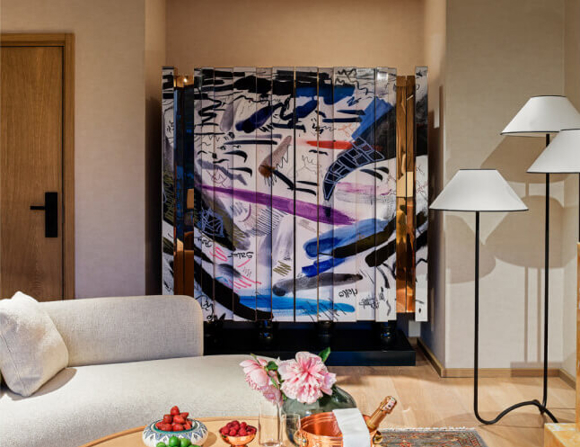
Arslan Sukan
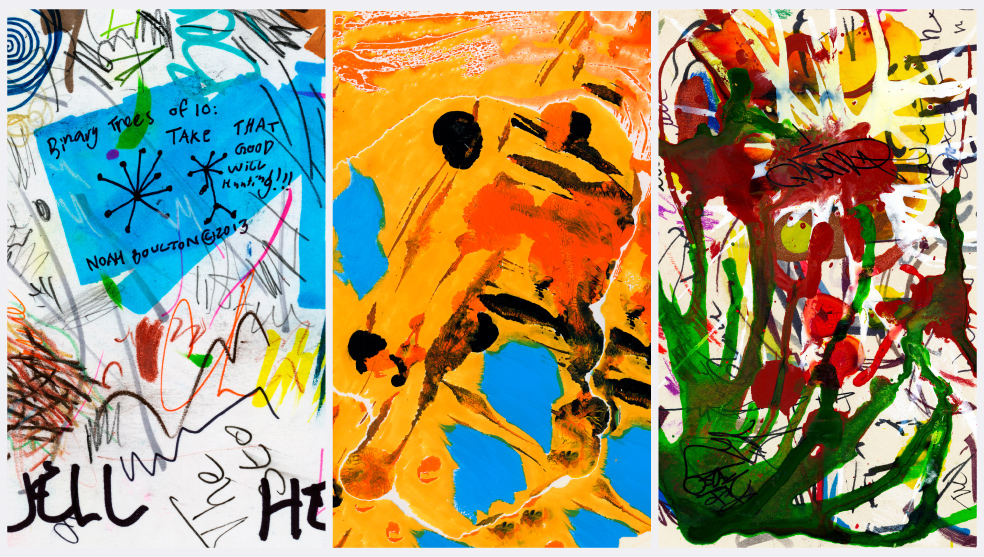
Sükan is a versatile artist educated in interior architecture and photography. Their work focuses on ideas that question the boundaries of human perception, exploring the limits between the physical and the virtual, the visible and the invisible. Their art presents a challenging narrative that initially meets the viewer’s expectations but ultimately disrupts and overturns that perception in practice.
Sükan’s conceptual practice which investigates perception, visibility, and the in-between space of the physical and virtual was integrated into the intimate context of Aliée’s rooms through a set of four selected works. These were adapted and applied onto custom-designed maxi-bars created by renowned architects Dayna Lee and Ted Berner, who are responsible for the architectural identity of the Aliée Istanbul.
Details:
UNTITLED, 2018.
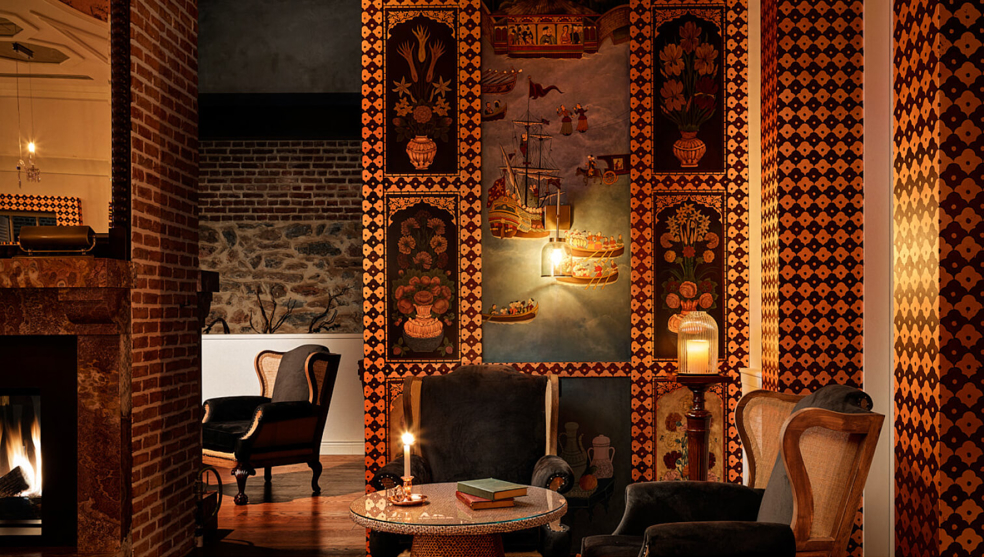
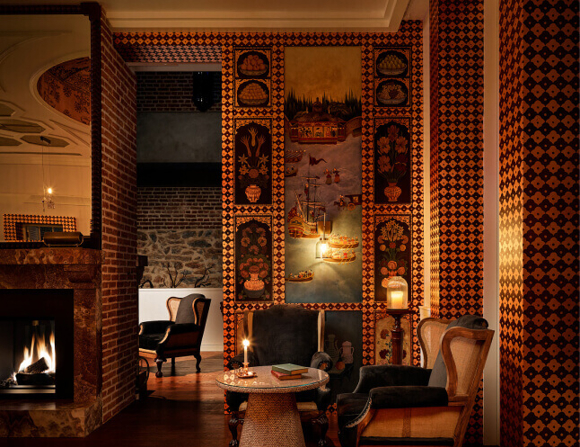
Tuğba Güney (Pink Bar Kalemişi)
Room of Sultan Ahmed II (Fruit Room)
Located in the Harem section of Topkapı Palace, the Room of Sultan Ahmed III is also known as the "Fruit Room" due to the fruit paintings adorning its walls. Reflecting the elegance of the Tulip Era, the stylized and naturalistic fruit motifs symbolize abundance.
The walls feature vases and pots filled with flowers painted in miniature style, showcasing the artistic approach of the period. Bouquets in golden vases and fruit depictions on ceramic plates reveal the splendor of the Ottoman palace. This room served as a private space where sultans would occasionally rest and enjoy fruit.
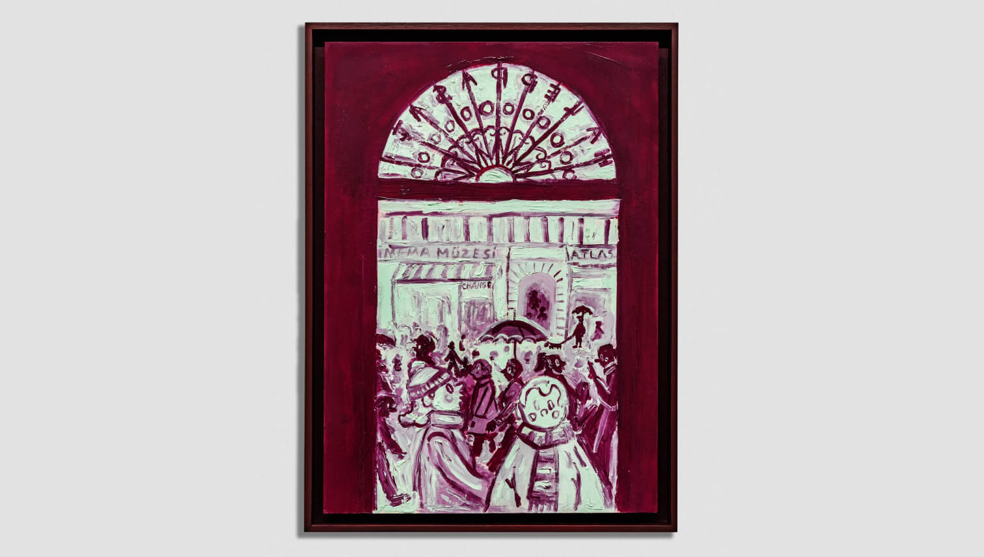
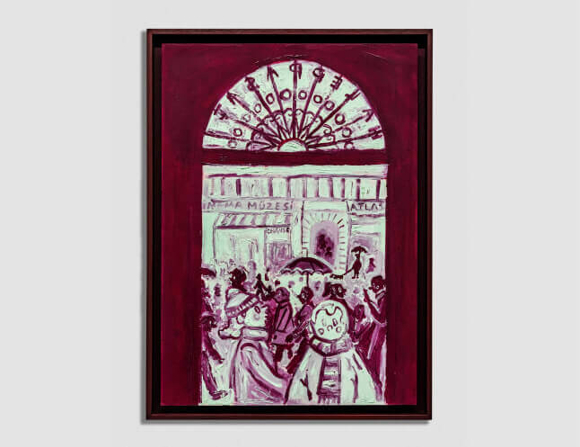
Melih Çebi
Melih Çebi’s Halep to İstiklal Street explores themes of migration, history, and space through a journey from Aleppo to Istanbul. The work brings together past and present, individual experiences and collective memory, prompting the viewer to reflect on the connections between cities and their people.
Details:
Halep to İstiklal Street, 2025.
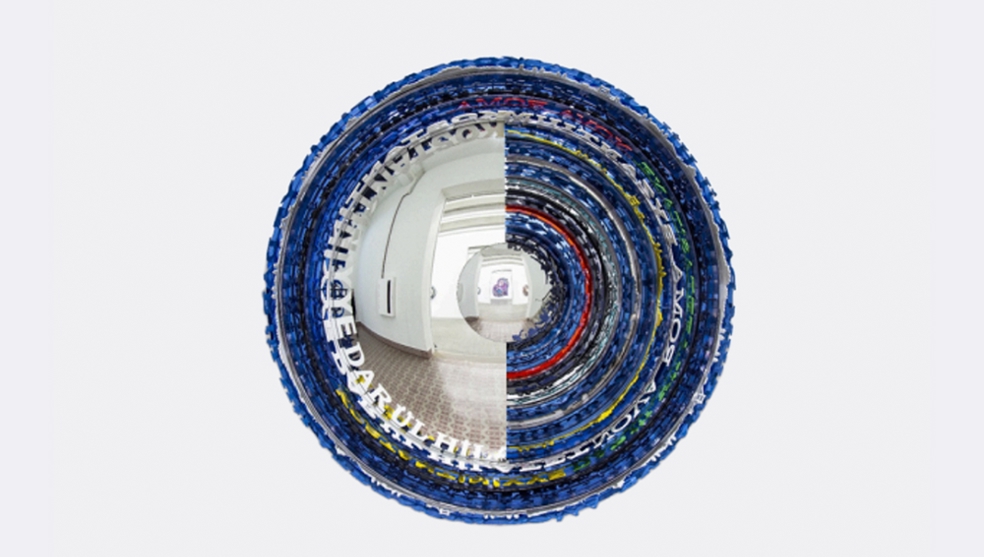
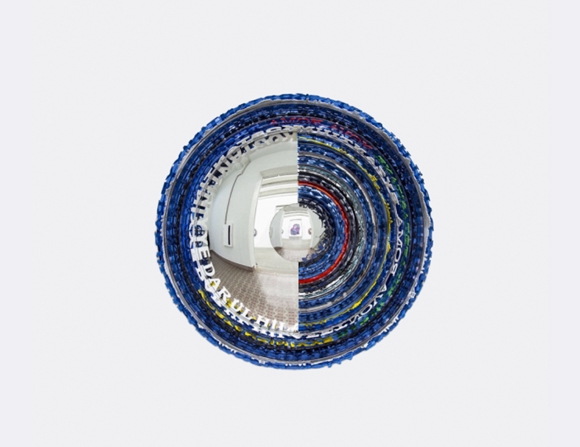
Çemberlitaş Tepesi
Ahmet Güneştekin’s work Çemberlitaş Tepesi addresses Istanbul’s historical memory and cultural layers through a circular composition, pointing to the cyclical nature of time. The reference to Çemberlitaş—extending from the Byzantine era through the Ottoman period and still present today—forms the foundation of the strong connection the work establishes between past and present. Expanding from the center outward, the structure evokes not only a spatial journey but also a mental and historical depth, while overlapping colors, texts, and fragments render visible the city’s multicultural fabric and its suppressed layers of memory. Through Güneştekin’s approach of bringing traditional motifs together with a contemporary aesthetic, the work invites the viewer not into a fixed narrative, but into an ever-expanding and transforming field of collective memory.
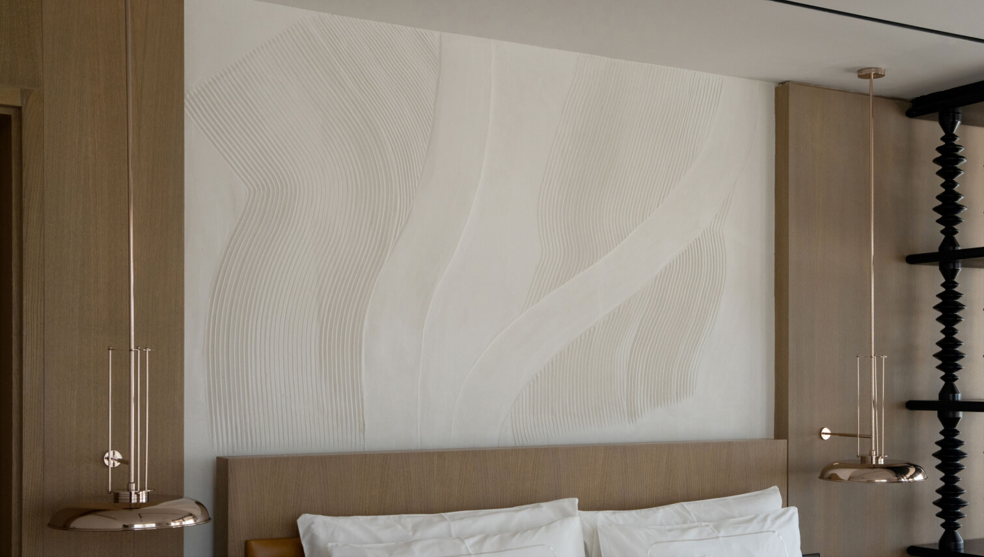
Sahra Bas
The artist creates organic and rhythmic narratives through surface and texture using building materials. On the surfaces he manipulates with spatula and chisel, he develops reliefs that provide both visual and tactile experiences, integrating them into architectural projects to establish a connection between space and surface. The five special designs he prepared for Aliée redefine the expressive language of the surface by combining industrial techniques with handcrafted work.
Wings on the Wall
For Aliée Art Season, art moves beyond the House and into the public realm with French artist Youri Cansell, known as Mantra. Across the Mondaine façade, a kaleidoscope of butterflies inspired by species found around the Golden Horn unfolds entirely by hand, transforming the architecture through shifts in scale, colour and intricate detail. Changing with the light and movement around it, the mural becomes part of everyday life at Tersane Istanbul, encountered by those who seek it out and those who simply happen upon it.
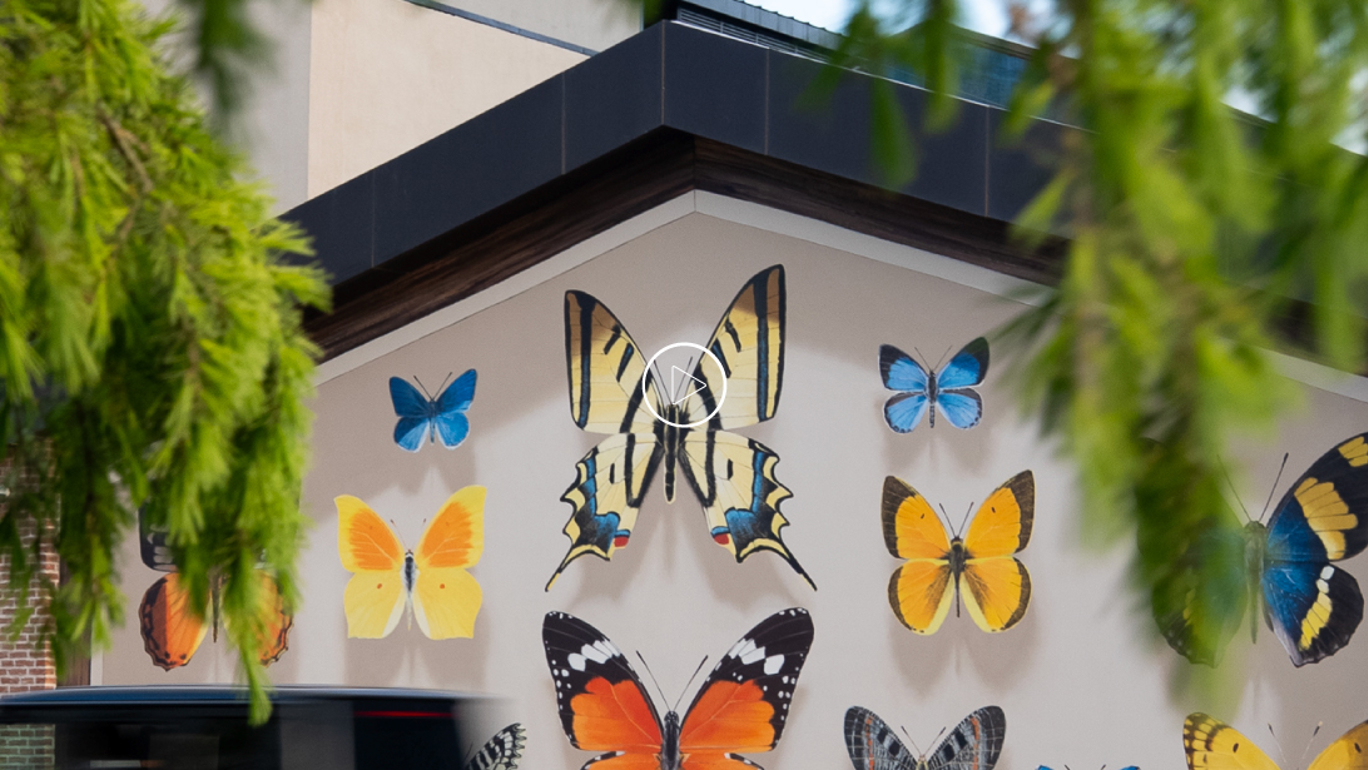
Interview with the artist
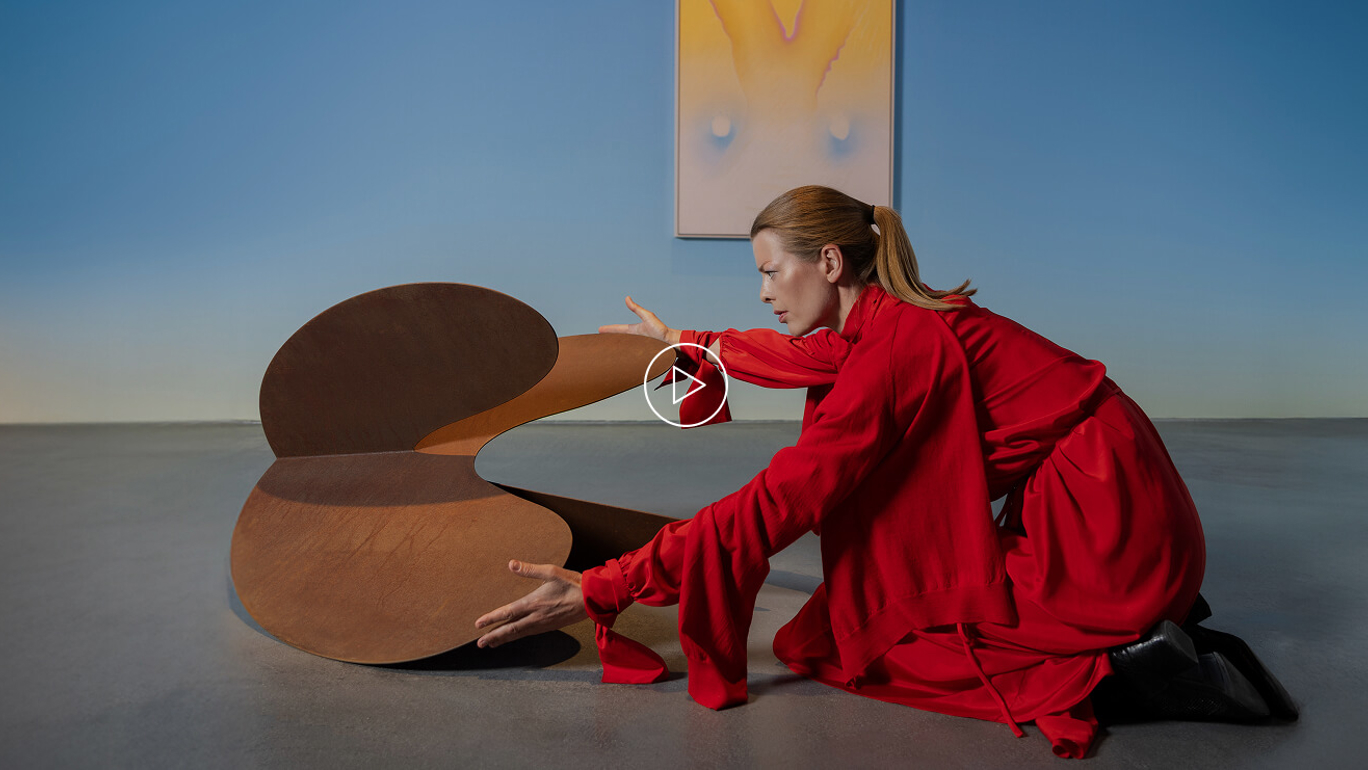
Jorinde Voigt’s installation at Aliée features brass mobiles from her Contemplation series and the paper work Immersive Integral – Universal Splash. Inspired by the Fibonacci sequence and golden ratio, the works explore perception, time and the cosmos. On view for six months, the installation shifts with each viewer to create a personal experience.
Three Days of Daisies
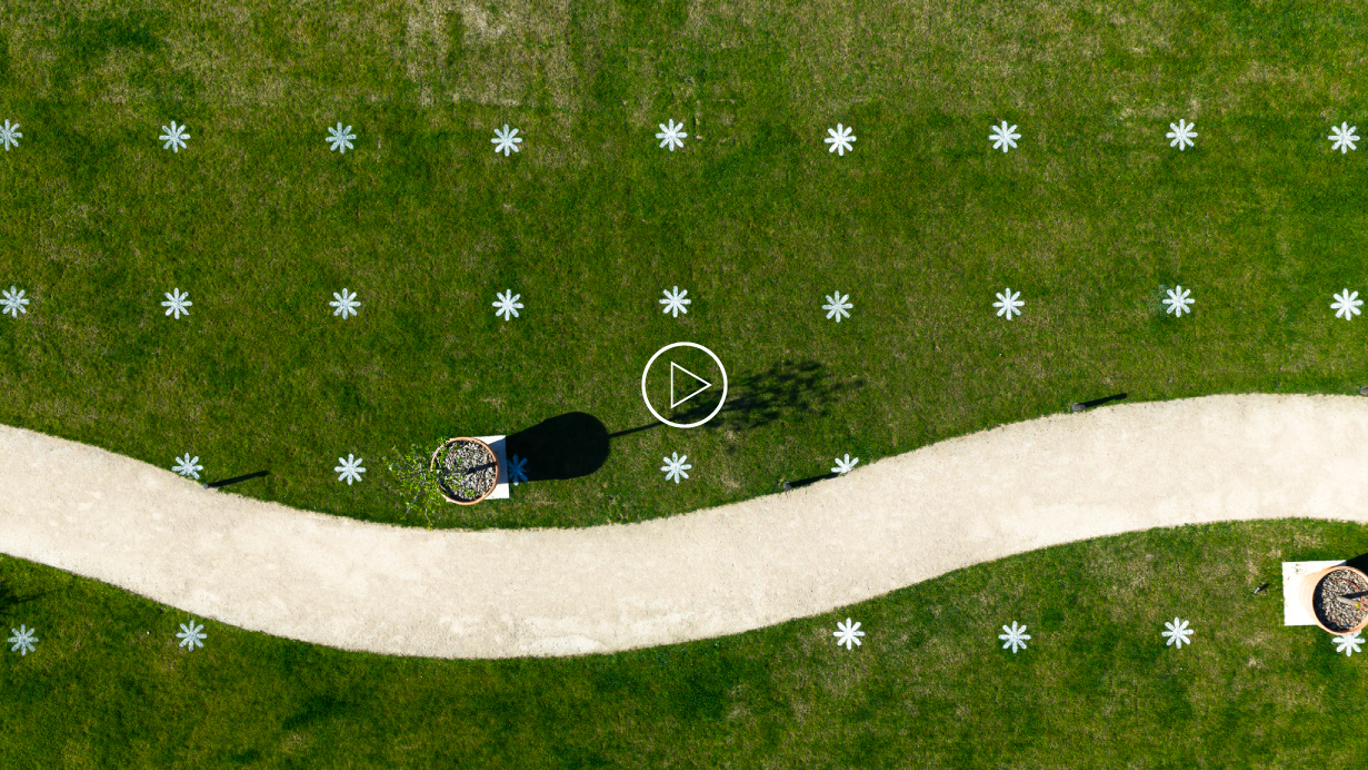
Swiss artist Giulio Gallana spent three days drawing daisies across Aliée's Hasbahçe— a quiet, living tribute to spring. Ephemeral by nature, gone with the season. We sat down with him to hear the story behind the flowers.